
Stephen Byrn, David Engers, Pamela Smith
In the modern landscape of pharmaceutical development, it is increasingly understood that a medicine is more than just a molecule because the solid form of an active pharmaceutical ingredient directly dictates its solubility, bioavailability, and stability. Regulatory bodies like the FDA, guided by ICH Q6A, ICH Q8 and ICH Q9, place the responsibility on manufacturers to strictly control the crystal form of a drug substance, especially when bioavailability is a critical factor. To address the common industry risk of suddenly appearing or disappearing polymorphs, a polymorph confirmation/characterization study is recommended early in development. This approach focuses on utilizing the learning before doing approach and creating a comprehensive Form Record that includes unique primary discriminators like X-ray powder diffraction patterns and thermal analysis. Reproducibility evidence is gathered from independent preparations to ensure the form is distinct and reliable. Comparison of those independent preparations once the Form Record is established is critical to rational product development.
Solid forms often first appear during early synthesis and crystallization. Because solids are easier to isolate and manufacture, the first crystalline/solid material frequently becomes the working form by default. Without structure confirmation, however, this early material may not be fully characterized. Ambiguity at this stage can later manifest as unexpected phase transformations or appearance of new forms during scale-up, variability in dissolution or pharmacokinetics, regulatory comparability challenges, or weakened patent positions. Establishing structural clarity early removes uncertainty and allows development programs to proceed on a stable scientific foundation. Importantly, this can be accomplished on very small quantities of material, often 20–50 mg, allowing early-stage programs to move forward confidently without waiting for large-scale synthesis.
Our approach is designed to provide rapid, decision-grade confirmation using a structured, orthogonal workflow as shown in Figure 1. Each technique contributes complementary information so that conclusions are based on converging evidence rather than a single data point. The non-destructive structural fingerprinting uses microscopy, laboratory X-ray powder diffraction (with indexing when feasible), and Raman microscopy to establish phase identity and assess crystallinity.
Optical microscopy provides an initial understanding of crystal habit, morphology, and heterogeneity, often revealing early signs of mixtures or inconsistencies. High-quality X-ray powder diffraction generates a structural fingerprint and allows evaluation of crystallinity and phase purity; when possible, indexing supports assignment of a unit cell and strengthens structural certainty. Raman microscopy adds a vibrational dimension, capturing hydrogen-bonding environments and subtle conformational distinctions that may differentiate closely related forms. Together, these methods provide a robust structural picture and establishment of a new polymorph with defined characteristics. These methods can usually rule out mixtures and are supplemented, if possible, by single crystal structure determination to unequivocally establish the existence of a defined solid form.
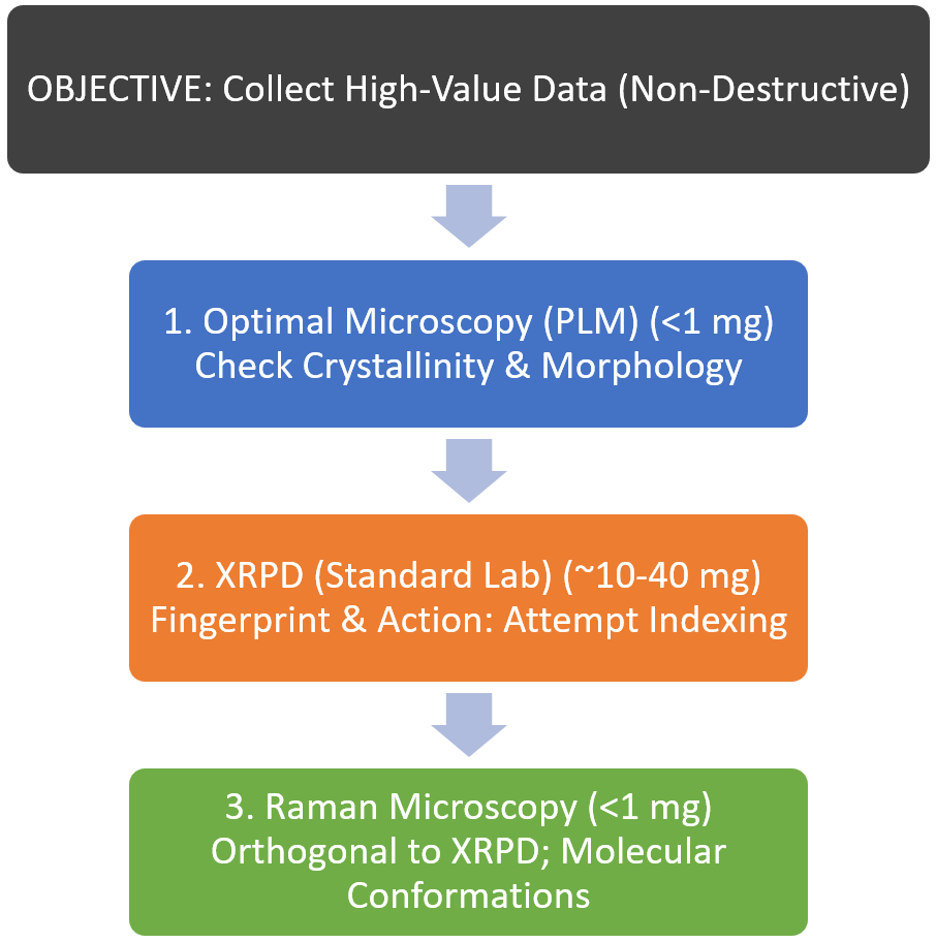
Figure 1. Non-Destructive ‘Structural Fingerprint’ for form assessment (Phase 1)
This study results in a documented solid-form record that can support reference standard designation, clinical supply control, regulatory submissions, supplier qualification, and intellectual property strategy. The Form Record captures the structural fingerprint, phase assessment, and reproducibility evidence in a format suitable for scientific and regulatory communication. By translating analytical results into development-relevant conclusions, the work extends beyond characterization and into risk reduction.
Not every polymorph question requires a full screening campaign. A structured initial assessment often determines whether the issue is a rapid confirmation exercise or whether a more extensive investigation is required. Making that distinction early saves time and resources while maintaining regulatory defensibility. Clinical programs depend on consistent use of a defined solid form, and even subtle shifts in polymorphic composition can influence dissolution performance or pharmacokinetics. Establishing clarity early reduces downstream surprises and strengthens both regulatory positioning and lifecycle management.
Ultimately, structural certainty is a strategic asset. By resolving ambiguity when material is scarce and decisions are formative, development programs gain stability, reproducibility, and intellectual property strength. In solid-state pharmaceutical science, clarity at the molecular level translates directly into confidence at the clinical and commercial levels.
Once the structural fingerprint is established in Phase 1, a critical decision must be made: Is the fingerprint sufficient for the current development risk, or do ‘red flags’—such as evidence of solvate formation or peak broadening—necessitate the deeper dive of Phase 2? The following triggers would indicate the importance of including Phase 2 in the Form Record: (1) Evidence of hydrates/solvates; (2) Evidence of low crystallinity; (3) Ambiguous indexing; and (4) Indication of a complex regulatory path such as that involving a BCS Class 2 API.
Phase 2 Advanced Characterization Study
A Phase 2 (Stage 2) advanced characterization study is advisable in specific instances to focus on the composition and stability domains of a solid form, particularly when dealing with complex systems such as solvates, desolvated solvates, or mixtures of solvated and unsolvated materials. A Phase 2 study can usually be carried out on the initial allocation of 50 mg of API. Part of this study is also aimed at the systematic elimination of confounders—such as moisture content, residual solvent incorporation, amorphous character, preferred orientation, strain effects, or processing-induced disorder—to ensure that the assigned form reflects true structural distinctiveness rather than artifacts. Before declaring a new polymorph or confirming equivalence of a known form, alternative explanations are assessed in a disciplined manner through detailed characterization of thermal properties, solubility, and moisture sorption (hygroscopicity) profiles. When single crystal analysis is not possible, additional studies such as synchrotron diffraction are deployed strategically with the ultimate goal of achieving structural certainty without generating unnecessary data.
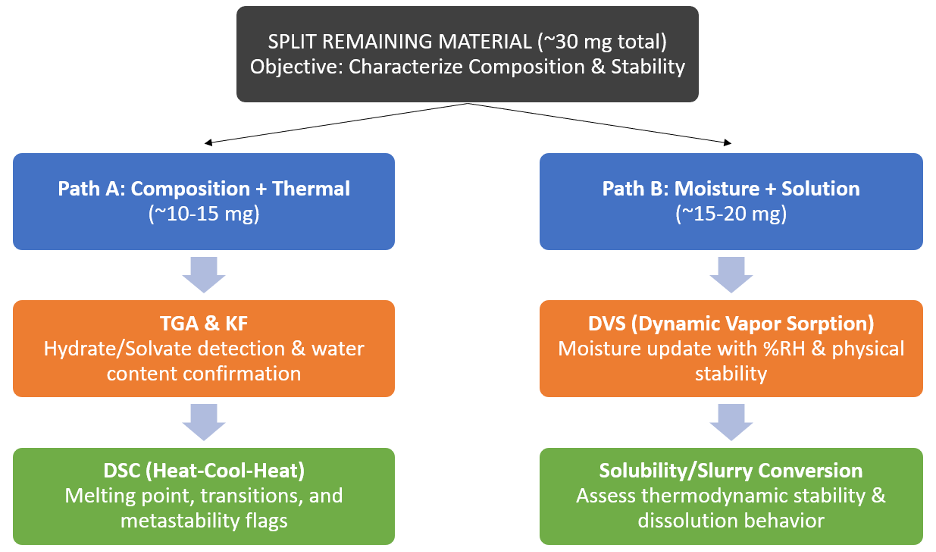
Figure 2. Composition & Stability Domain (Phase 2)
These studies are critical for securing comprehensive patent claims and avoiding failed claims due to insufficient structural definition. Furthermore, they remove the ambiguity that exists when single-crystal structure determination is not possible, helping the researcher approach an unequivocal determination of the drug substance’s structure.
The workflow envisions two distinct paths:
- Path A: Composition and Thermal Analysis. This path utilizes Differential Scanning Calorimetry (DSC)—including heat-cool-reheat studies to identify glass transitions or recrystallization—along with Thermogravimetric Analysis (TGA) and Karl Fischer (KF) titration for definitive moisture and solvent analysis. This path provides critical information regarding the precise composition and stoichiometry of the solid phase.
- Path B: Moisture Sorption, Solubility, and Slurry Behavior. This path evaluates moisture sorption-desorption isotherms, solubility, and slurry conversion behavior. It is critical for understanding the material’s ability to withstand high-humidity environments and for identifying potential slurry transformations. Moreover, solubility studies provide a clear definition of a BCS class 2 substance. The slurry studies can lead to the removal of unwanted mixtures by slurrying the system to induce conversion into a single, stable polymorph.
Conclusion
By completing both the initial screening and the optional Phase 2 advanced characterization, which can often be performed on as little as 50 mg of material, researchers can achieve a firm and irrefutable understanding of the solid form present and establish a Form Record early in development.